Tuesday, June 4, 2013

Adjustment -- 6 months into homeschooling

The transition from a traditional school to the life style of homeschooling,  isn't just hard for the children as they take time to deschool, learn to love learning again, and become "undamaged."  Some other huge impacts:

1. It 100% changes the relationship between the primary homeschooling parent and the child -- no longer is there another outside "authority" that you can  use as a tool in parenting ("of course there's school today," "you're doing homework because the teacher assigned it"). An outside authority figure takes the heat off the parent and lets the parent be part of the team who either supports the child on one side against the school/teacher/etc. or helps the authority of the parent. Instead, everyone needs to find a new balance.  In theory, this is not a problem because you're already a parent.  But in reality, it's a huge shift and requires really thinking through what is and isn't important across a broad range of areas -- from schedules to academics to finding and balancing social activities.  This is a huge impact for day in and day out and as everyone's norming again, there can be a very, very long period of storming... (Tuckman's stages of team development).

2.  The (typically) mother loses a huge social base -- directly because the new homeschooling parent no longer has the PTA or the school connections, but also indirectly with all the friends who now don't get why they're doing this and whether or not the friends should feel insulted that their friend is rejecting their educational system.  Every single person the homeschooling parent has to connect with now has to connect at an activity or event where they're also trying to build relationships for their children.  It's really hard -- 6 to 10 months after starting is probably the hardest.  (Similar to moving to a new location -- I've always found it hardest 6 months in.)  Homeschooling parents often spend the first few months signing up for everything possible -- to try to build a new social network quickly for everyone. At the same time, the homeschooling parent is trying to figure out her new role in the lifestyle.  6-10 months in, you feel like you've got it but you don't have any comfortable ruts/niches yet.

3.  The family's entry into a new culture can be rocky.  It may seem very straightforward but there are underlying cultural norms that are very hard to figure out sometimes.  Nothing's written.  The only way to figure it out is trial and error and see what goes badly -- or feels bad at the time.  It's a difficult culture to navigate some times with what seems like it should be one way to respond turn into something unexpected...

The adjustment's worth it. But it does take time. And it could be rocky for the parent and the child -- and maybe even for the rest of the family and friends.  It's a normal adjustment period though, and will get better as everyone finds their niche and new life style patterns.

Handwriting Website

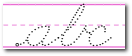
A very easy-to-use website for printing handwriting practice sheets -- both regular and d'Nealian...
http://www.handwritingworksheets.com/

You can also download it to your computer and print from there.


Sunday, September 16, 2012

Left brained right brained and creativity

An interesting test on right brained and left brained learning (though they're positioning it as a test of creativity where creativity = right brained... not sure I buy that!).  But, the results are interesting as they break out different aspects of Left Brain and Right Brain...

http://www.wherecreativitygoestoschool.com/vancouver/left_right/rb_test.htm

Here's their description of Left Brained and Right Brained:
http://www.wherecreativitygoestoschool.com/vancouver/left_right/

Left brained aspects:


  • Linear
  • Sequential
  • Symbolic
  • Logical
  • Verbal
  • Reality-based

Right Brain aspects

  • Holistic
  • Random
  • Concrete
  • Intuitive
  • Nonverbal
  • Fantasy-oriented

These are in the order I tested -- interestingly, I was about 60% left brain, 40% right brain -- dominant linear LB but holistic RB -- so my approach is a linear parts to whole processing of pieces of information in a holistic manner -- yep, that about sums me up!

AND here's another link with an interesting blog post about using left brain and right brain tendencies in art -- how there's a place for both approaches.

Saturday, July 21, 2012

Myers Briggs and Personality Descriptions

Just realized my absolute favorite Myers Briggs website is not listed among my resources:


An easy-to-do test, and some great descriptions of each personality's strengths and weaknesses...  A test for kids to take (only ends up with 3 attributes instead of 4), career choices, what to work on.


RPG for kids

Found this great resource / blog post for introducing strategy and role playing games with the 5 to 7 yo crowd and their own toys.  Haven't read it yet but the post sounds great and I'm going to.  I know my son does a lot of "attribute" and "characteristics" discussion with his friends so it might be a really cool option to do.

Wired.com Geek Dad


Evaluating The Year

I found this somewhere else and did some editing (but forgot to keep the link so it's not attributed to the author - sorry!).  Some great questions.

  1. What positive habits did each child show progress in this year?  Sometimes we forget how much progress they make in a year until you sit back and really think about what life was like a year ago and what it felt like you were continually reminding them of, day in and day out.  What's the current area each child needs to think about?
  2. How was the schedule this year?  Was it too busy?  Was there time to get things done?  What took more time than you expected -- and was it worth it?  Do you wish you had added something that you initially thought you couldn't handle? What changes do we need to consider for next year’s schedule?
  3. What were the unplanned learning experiences that happened this year? An unexpected illness?  A change in jobs or houses?  Unexpected trips?  What are some of the lessons each of us learned?
  4. What did I learn about __________ (insert name of each child individually) this year? This question will be fun to consider as you think back over the surprises you encountered with each child as he developed. Record the delightful changes as well as the challenging attitudes or tendencies.
  5. What curriculum changes do I need to consider for next year? What worked, and what didn’t work this year?
  6. What was a crowning moment this year? Note the obvious successes you saw in each child.
  7. What was our greatest challenge this year? Will this challenge carry into next year?
  8. What do I need to change, as parent/teacher, in my approach next year? Are my expectations realistic? Was the workload realistic for the age and development of each child? Do I lecture and/or moralize too much? Am I too intense? Do I look for joy in each day? Do I need to change priorities? Are the most important things getting the least amount of time?
  9. Was there anything I really hoped to do this year that didn’t happen? Why? Should it become a priority for next year?
  10. What can we do to celebrate each child’s progress this year? Ideas might include a special honors night at dinner or an end of the year party with certificates of accomplishment. Accomplishments could include any progress, spiritual or academic, that each child has made.
  11. What would I list as the academic progress of each child? Recognizing strengths and weaknesses will help you plan for next year.
  12. What would I list that was really good about this year? (It is easy to forget.)
  13. What changes would I recommend for next year?

Charlotte Mason

Charlotte Mason is a popular choice of an educational approach, especially for the younger years (though she had resources for all the way through high school).

Here are a some good Charlotte Mason sites:

This is a good blog series (10 days of posts about Charlotte Mason) talking about a lot of different areas of CM along with resources:

And some curriculum and planning guides for CM (they were at the NCHE Conference last year but not this year -- some of their materials look good):
A good outline of the different ages and expectations. Includes a good blogpost series about planning a CM curriculum:

Ambleside Online has some good outlines for CM as well:

----------------
And, Fiona and I did a discussion series a year ago on figuring out your educational philosophy and deciding how to organize a school year.  You might find something helpful here: